The explosive growth of AI computing power is driving a large-scale expansion cycle for global data center infrastructure. According to McKinsey estimation, by 2030, the investment scale in the global data center sector is expected to reach 7 trillion US dollars. However, the shortcomings of traditional construction-style data centers are becoming increasingly prominent: the construction period is long, the flexibility for later expansion is insufficient, and the high heat density brought by AI servers has sharply increased the heat management pressure and simultaneously raised the risk of electrical fires. The original construction model has become difficult to keep up with the rapid iteration of computing power.
 The prefabricated modular data center (MDC) has emerged as the mainstream delivery solution in this context. Compared with on-site construction, the core advantage of the prefabricated modular solution is very practical: most integration work is completed in the factory, significantly reducing the on-site construction period; the power and cooling units are integrated and tested in a controlled factory environment before leaving the factory, ensuring system quality; and more of the responsibility for system integration is shifted to upstream equipment manufacturers, forcing each subsystem component to be compatible and adaptable, enabling on-site "plug and play".
As MDC rapidly gains popularity, new problems have emerged. Modules can be produced separately, supplied in different locations, and then assembled into a complete system at the project site. The interweaving of multiple systems such as electrical, structural, and fire protection, and the implementation of approvals by local regulatory agencies (AHJ) in various regions have become a major pain point for many projects going to North America. UL 2755 is the core standard for this distributed modular architecture.
What does UL 2755 cover?
Many people have a misconception that UL 2755 is used to certify servers, cabinets, or individual power distribution cabinets. In fact, that is not the case. UL 2755, "Technical Specification for Certification of Prefabricated Modular Data Center Systems and Related Module Units", assesses the entire prefabricated modular data center system and its subordinate sub-module units. It does not assess individual components separately, but evaluates the overall safety of the power module, cooling module, IT module, and supporting auxiliary systems as a complete integrated system.
The 2025 version has made adjustments to address various security risks brought by AI high-density computing loads. Several core changes are worth paying attention to by equipment manufacturers and project parties:
Module classification and system integration risk assessment
In MDC projects, module forms are diverse, including power compartments, IT compartments, and cooling compartments. Different modules are independently manufactured, transported separately, and then assembled and linked at the project site. UL 2755 clearly classifies different functional modules and assesses the new security risks generated after the connection of the modules, rather than only evaluating the factory status of individual modules.
Multi-dimensional compliance framework, connecting with local regulatory AHJ
For MDC to be implemented in North America, it must simultaneously meet regulations in various fields such as electrical, mechanical, and fire protection. The standard provides a complete compliance framework to help projects connect with the review requirements of various local regulatory agencies, reducing the workload of project parties in independently sorting out various norms.
Enhanced structural safety-related requirements
Nowadays, many projects will involve module stacking, lifting and transportation, and all aspects of transportation, stacking load, and lifting specifications are included in the assessment scope. For large-scale replicated deployment MDC projects, structural safety assessment is a fundamental condition for ensuring on-site implementation safety.
Structured certification process
The standard provides a complete process from the RFQ demand stage, compliance initial review, to the complete system assessment, giving manufacturers a feasible certification path to reduce the trial-and-error costs in the initial communication of the project.
The NEC 646 clause supports certification and directly affects the efficiency of on-site implementation
The 2026 edition of the American National Electrical Code (NFPA 70) Section 646, has already listed UL 2755 as the recognized compliance determination basis for prefabricated modular data center MDC. This is very crucial for overseas projects.
The MDC that has obtained UL2755 certification is evaluated as a single integrated product. After arriving at the project site, the regulatory agency AHJ usually only conducts a review of the on-site installation situation. In contrast, for the MDC that has not obtained UL2755 certification, the entire system has not undergone an overall assessment. Upon arrival at the site, it needs to undergo a complete and comprehensive review by the local regulatory authorities, which prolongs the approval cycle and may directly cause project delays.
When it comes to the project side, through UL 2755 certification, one can actually obtain the following tangible benefits:
-Adaptation to different regulatory areas in North America, simplifying cross-regional project approval;
-Reduced on-site inspection content, shortening the deployment cycle of the MDC on-site;
-Using UL-listed components within the system, further reducing the pressure of on-site compliance verification;
-Outputting standardized documents recognized by AHJ, reducing on-site communication resistance.
At the level of the complete equipment set, the MDC project cannot only focus on the certification of the entire machine.
Here, it is necessary to clearly distinguish two things: UL2755 is a certification for the entire MDC system, but the power switch equipment within the system still needs to meet the corresponding product-level American standards.
 UL Global Factory
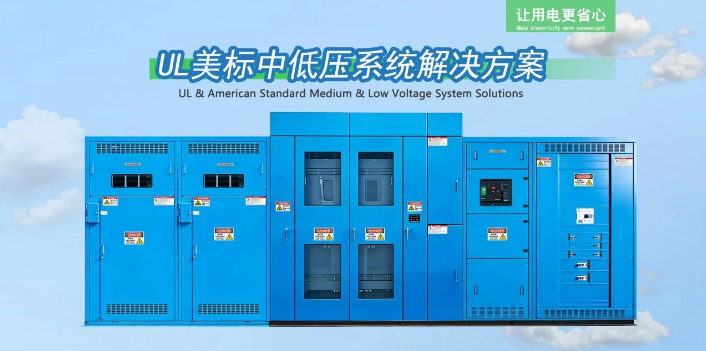
Taking the example of a large number of North American MDC power cabinet projects we have contacted: the medium-voltage switch cabinets in the cabin need to comply with the IEEE C37.20 series standards, and the low-voltage main distribution panels need to match UL891, UL67, etc. The UL2755 complete machine system certification cannot replace the product certification and type tests of the switch cabinets themselves.
In real projects, a situation often occurs: the entire machine does UL2755 certification, but the cabin‘s supporting switch cabinets, in order to reduce costs and reduce size, the materials, creepage distance, and internal arc protection do not meet the requirements of the product‘s own American standards. Even if the entire machine obtains the report, it still leaves operational safety hazards.
MDC pursues rapid delivery and factory prefabrication, but this does not mean that the safety bottom line of the internal switch equipment can be lowered. The safety of the entire machine system is based on the compliance of each switch equipment. The power cabinet, as the energy core of MDC, the materials, tests, and certifications of the medium and low-voltage complete cabinets are still items that cannot be skipped in the project selection verification.
FATENG Electric has deeply specialized in the field of American standard complete equipment, familiar with the requirements of North American prefabricated power cabinets and E-House, and can provide medium and low-voltage switch equipment that meets IEEE and UL series standards, adapting to the UL2755 certification requirements of the MDC complete machine, providing a compliant power complete equipment solution for the moduleized data center projects going to North America.
As MDC rapidly gains popularity, new problems have emerged. Modules can be produced separately, supplied in different locations, and then assembled into a complete system at the project site. The interweaving of multiple systems such as electrical, structural, and fire protection, and the implementation of approvals by local regulatory agencies (AHJ) in various regions have become a major pain point for many projects going to North America. UL 2755 is the core standard for this distributed modular architecture.
What does UL 2755 cover?
Many people have a misconception that UL 2755 is used to certify servers, cabinets, or individual power distribution cabinets. In fact, that is not the case. UL 2755, "Technical Specification for Certification of Prefabricated Modular Data Center Systems and Related Module Units", assesses the entire prefabricated modular data center system and its subordinate sub-module units. It does not assess individual components separately, but evaluates the overall safety of the power module, cooling module, IT module, and supporting auxiliary systems as a complete integrated system.
The 2025 version has made adjustments to address various security risks brought by AI high-density computing loads. Several core changes are worth paying attention to by equipment manufacturers and project parties:
Module classification and system integration risk assessment
In MDC projects, module forms are diverse, including power compartments, IT compartments, and cooling compartments. Different modules are independently manufactured, transported separately, and then assembled and linked at the project site. UL 2755 clearly classifies different functional modules and assesses the new security risks generated after the connection of the modules, rather than only evaluating the factory status of individual modules.
Multi-dimensional compliance framework, connecting with local regulatory AHJ
For MDC to be implemented in North America, it must simultaneously meet regulations in various fields such as electrical, mechanical, and fire protection. The standard provides a complete compliance framework to help projects connect with the review requirements of various local regulatory agencies, reducing the workload of project parties in independently sorting out various norms.
Enhanced structural safety-related requirements
Nowadays, many projects will involve module stacking, lifting and transportation, and all aspects of transportation, stacking load, and lifting specifications are included in the assessment scope. For large-scale replicated deployment MDC projects, structural safety assessment is a fundamental condition for ensuring on-site implementation safety.
Structured certification process
The standard provides a complete process from the RFQ demand stage, compliance initial review, to the complete system assessment, giving manufacturers a feasible certification path to reduce the trial-and-error costs in the initial communication of the project.
The NEC 646 clause supports certification and directly affects the efficiency of on-site implementation
The 2026 edition of the American National Electrical Code (NFPA 70) Section 646, has already listed UL 2755 as the recognized compliance determination basis for prefabricated modular data center MDC. This is very crucial for overseas projects.
The MDC that has obtained UL2755 certification is evaluated as a single integrated product. After arriving at the project site, the regulatory agency AHJ usually only conducts a review of the on-site installation situation. In contrast, for the MDC that has not obtained UL2755 certification, the entire system has not undergone an overall assessment. Upon arrival at the site, it needs to undergo a complete and comprehensive review by the local regulatory authorities, which prolongs the approval cycle and may directly cause project delays.
When it comes to the project side, through UL 2755 certification, one can actually obtain the following tangible benefits:
-Adaptation to different regulatory areas in North America, simplifying cross-regional project approval;
-Reduced on-site inspection content, shortening the deployment cycle of the MDC on-site;
-Using UL-listed components within the system, further reducing the pressure of on-site compliance verification;
-Outputting standardized documents recognized by AHJ, reducing on-site communication resistance.
At the level of the complete equipment set, the MDC project cannot only focus on the certification of the entire machine.
Here, it is necessary to clearly distinguish two things: UL2755 is a certification for the entire MDC system, but the power switch equipment within the system still needs to meet the corresponding product-level American standards.
Taking the example of a large number of North American MDC power cabinet projects we have contacted: the medium-voltage switch cabinets in the cabin need to comply with the IEEE C37.20 series standards, and the low-voltage main distribution panels need to match UL891, UL67, etc. The UL2755 complete machine system certification cannot replace the product certification and type tests of the switch cabinets themselves.
In real projects, a situation often occurs: the entire machine does UL2755 certification, but the cabin‘s supporting switch cabinets, in order to reduce costs and reduce size, the materials, creepage distance, and internal arc protection do not meet the requirements of the product‘s own American standards. Even if the entire machine obtains the report, it still leaves operational safety hazards.
MDC pursues rapid delivery and factory prefabrication, but this does not mean that the safety bottom line of the internal switch equipment can be lowered. The safety of the entire machine system is based on the compliance of each switch equipment. The power cabinet, as the energy core of MDC, the materials, tests, and certifications of the medium and low-voltage complete cabinets are still items that cannot be skipped in the project selection verification.
FATENG Electric has deeply specialized in the field of American standard complete equipment, familiar with the requirements of North American prefabricated power cabinets and E-House, and can provide medium and low-voltage switch equipment that meets IEEE and UL series standards, adapting to the UL2755 certification requirements of the MDC complete machine, providing a compliant power complete equipment solution for the moduleized data center projects going to North America.